Selection
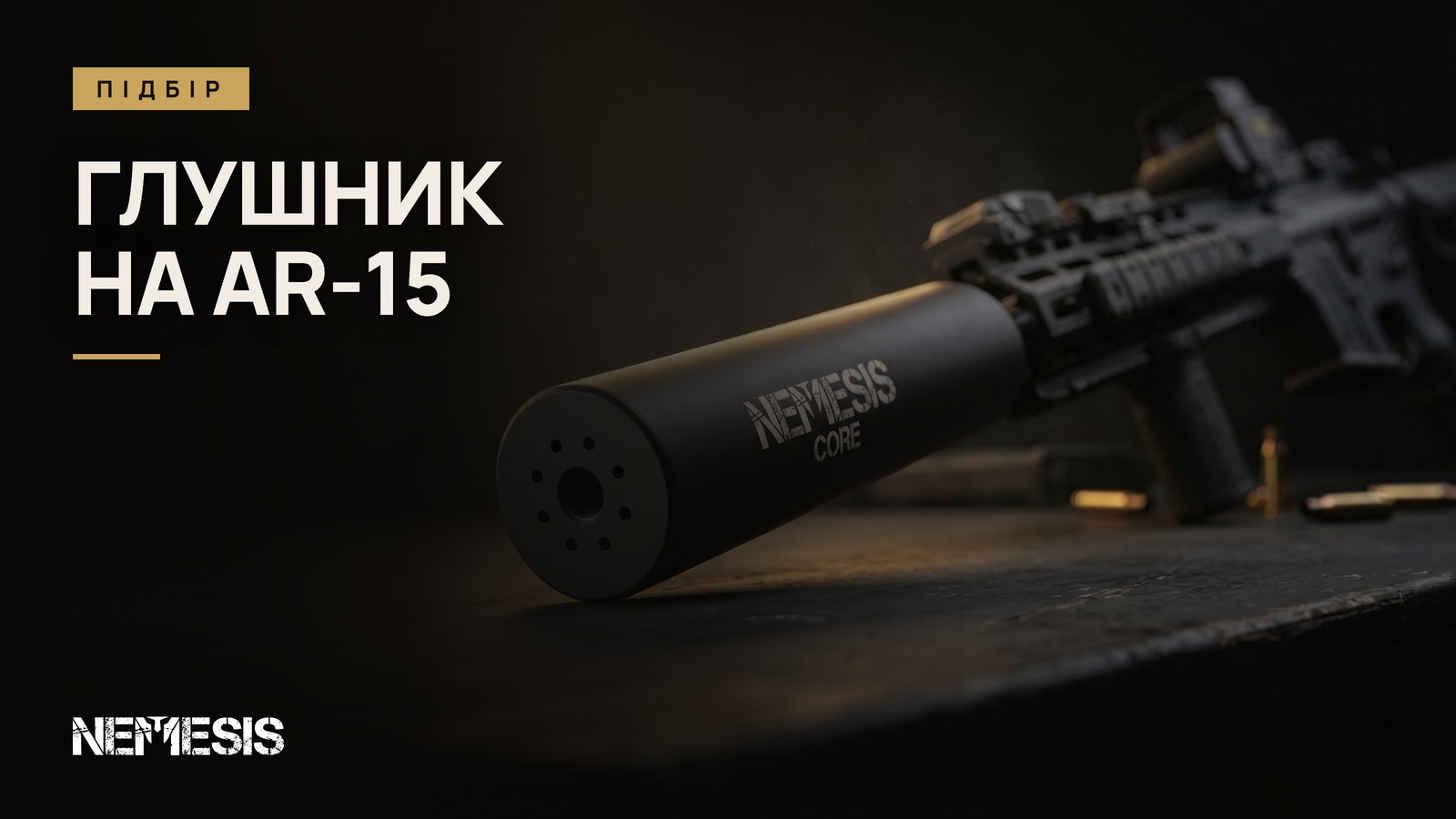
Suppressor for AR-15 (DB15): choosing without the dB myths
Most suppressors for AR-15 push gas back - into your face and into the receiver. The cycle slows, component life drops. Let's look at what actually matters when choosing for the Diamondback DB15.
Contents
AR-15 / DB15 SUPPRESSOR GUIDE
If you're looking for a suppressor for the AR-15 Diamondback DB15, the main question isn't "how quiet is it". The main question is where the gas goes after the shot. That determines whether you get smoke in your eyes, oil on your cheek, and whether your bolt carrier group survives 10,000 rounds.
Short version: a working suppressor for AR-15 is one that manages gas flow and doesn't kill the cycle. Not the one with the boldest minus-decibel number in the catalog.
Overgas - the main problem with a suppressed AR-15
The AR-15 Diamondback DB15 is sensitive to changes in system pressure. Add a suppressor - you shift the gas balance. If the can simply accumulates gas in the housing, that pressure looks for a way back through the gas port.
What follows:
- overgas into the receiver;
- smoke and oil in your face after the first magazine;
- the cycle runs harsh, brass ejects erratically;
- the bolt carrier group wears out faster than it should.
The point: it's not about sound. It's about where the gas goes after the shot.
What to look at when choosing
Flow-through design
The design must direct the flow, not just dampen it with raw volume.
Reduced backpressure
Less back-pressure means less gas into the receiver and less in your face.
Stable cycle
The bolt carrier group should run smoothly, without hard impacts during strings of fire.
Durability of the action
A cleaner receiver after a session - your expensive rifle lasts longer.
The real question is: which suppressor doesn't make the AR-15 worse. "Quietest" is a separate topic - don't confuse the two.
3 mistakes when choosing a suppressor for AR-15
- Looking only at decibels. The number in the catalog says nothing about how the rifle behaves after 30 rounds.
- Believing in "% sound reduction". A marketing label. It describes neither peak pressure nor the nature of the impulse.
- Thinking bigger = quieter. Volume without controlled geometry is just a larger can full of gas.
Bad query: "I want maximum quiet".
Working query: "I want a stable cycle with no gas in my face".
Working query: "I want a stable cycle with no gas in my face".
Which design works better on the DB15
On the AR platform, systems that consistently perform well are those that:
- intercept the peak impulse at the muzzle end;
- reduce back-pressure through multi-channel geometry;
- cool the flow at intermediate stages;
- vent gas in a controlled direction forward, not back into the receiver.
That's a fundamentally different logic than "a tube with baffles".
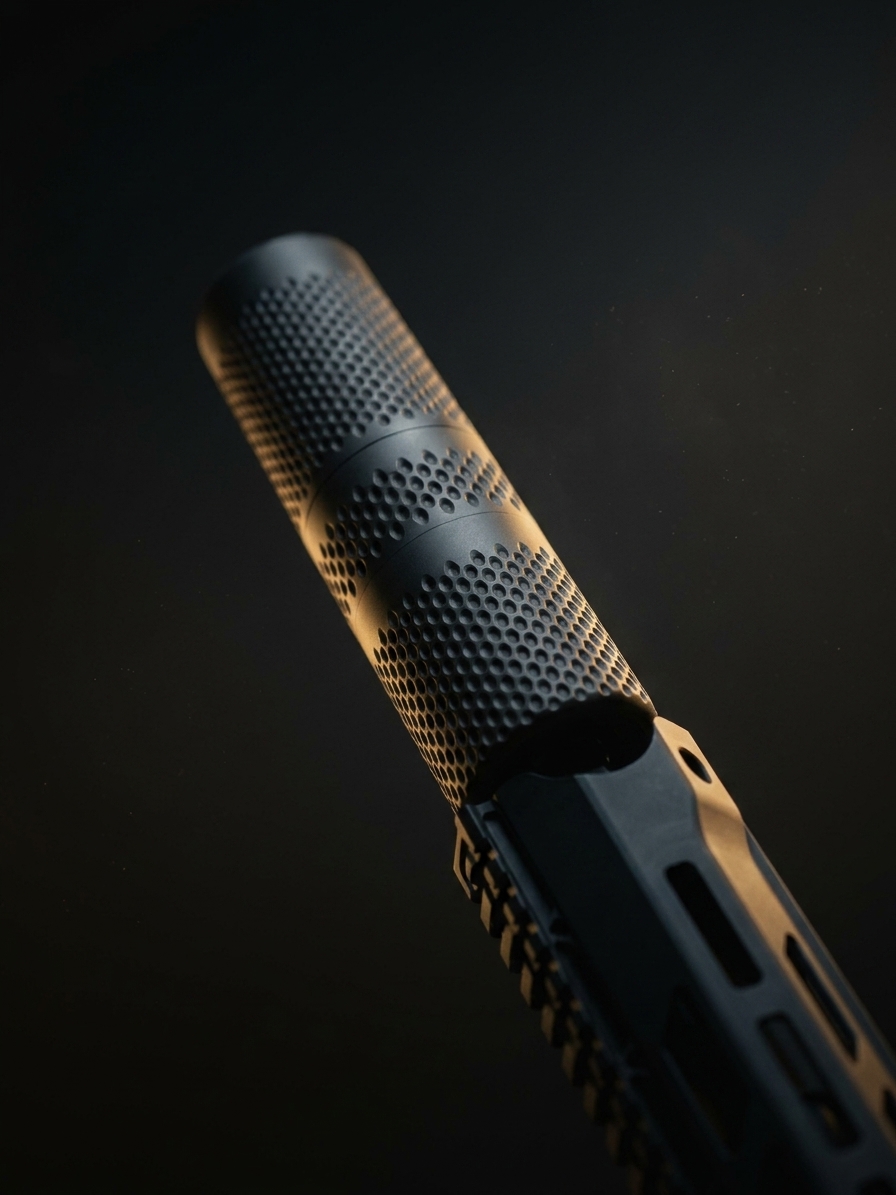
Why ARCANE works on the DB15
Nemesis ARCANE is built around the AR platform logic. It doesn't chase minus-decibels. It keeps the rifle controllable: 7075-T6 aluminum housing, titanium in the first chambers, ZERO - 5 stages / 8 flow-through channels.
- backpressure doesn't linger in the housing;
- brass ejects predictably;
- the cycle runs even through strings of fire;
- the breech stays clean.
Simply put: a good suppressor shouldn't make the AR-15 worse after installation.
Conclusion
If you're looking for a suppressor for the AR-15 DB15, stop searching for "-30 dB" in a catalog. Look at gas dynamics: where the flow goes, how the bolt carrier group behaves, and what the receiver looks like after 200 rounds.
Want to find the right model for your platform?
Browse all suppressors for AR-15. Send us your caliber and configuration - we'll advise. Nemesis ARCANE or other models in the NEMESIS catalog.
Browse all suppressors for AR-15. Send us your caliber and configuration - we'll advise. Nemesis ARCANE or other models in the NEMESIS catalog.