Інженерія
CASCADE Flow-Through in CORE and MICRO: How It Works
The CASCADE flow-through system operates in CORE and MICRO. What is it, why does the bolt group last longer, and how does it differ from ZERO (ARCANE) and the simple, durable LEGION with no flow-through system.
Contents
The steel models NEMESIS CORE and MICRO are not just "tubes with chambers". At their core is the CASCADE flow-through system. It reduces back pressure, eliminates overgas in the face, and keeps the bolt group in working condition longer.
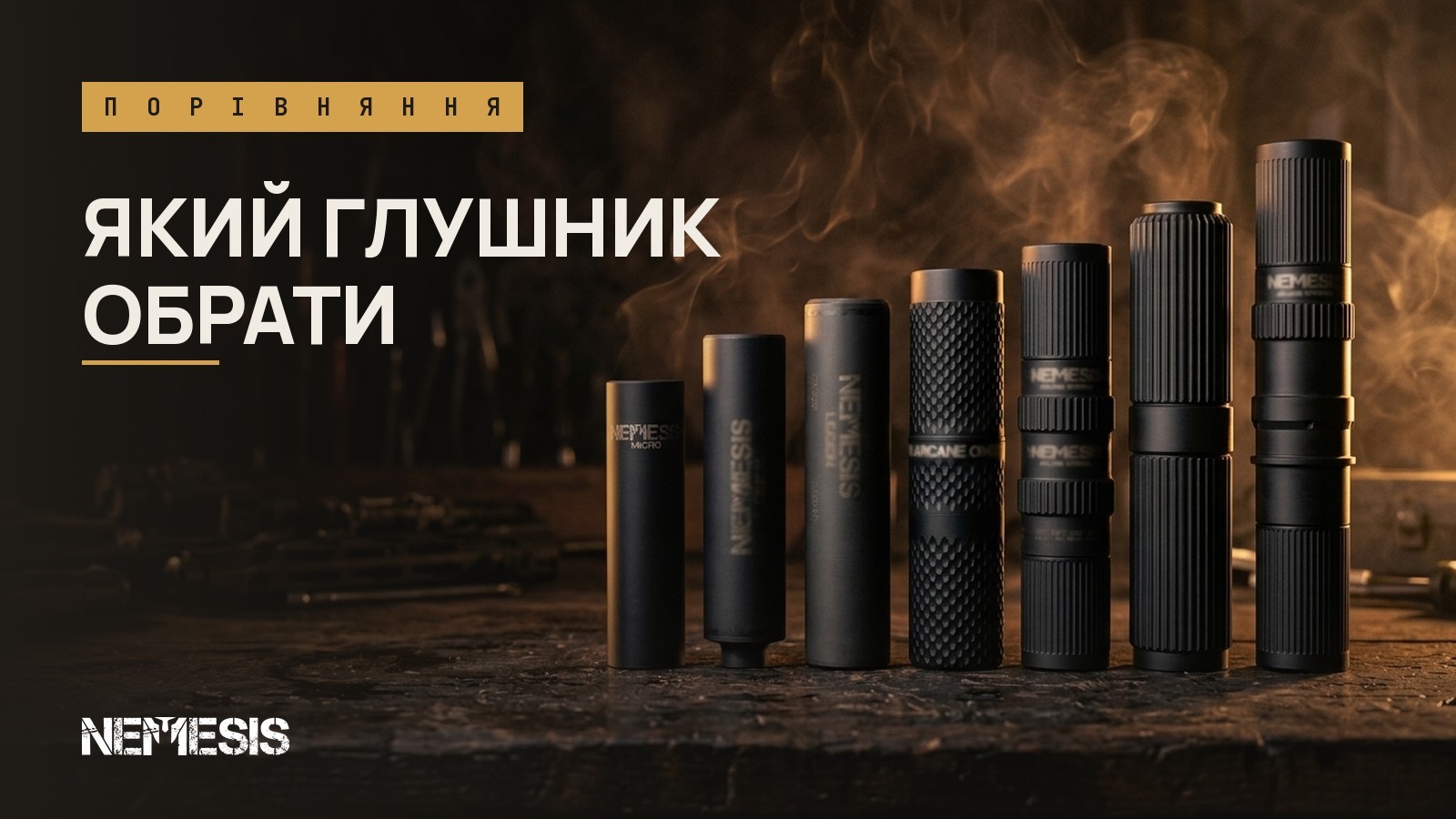
Importantly: this is not ZERO. ZERO is an architecture with 5 stages / 8 channels, and it is only found in ARCANE with titanium and aviation-grade 7075-T6. In CORE and MICRO, we have weapon steel, oxidation, and the CASCADE flow-through system. The simple, durable LEGION has no flow-through system - it focuses on a steel construction, resource, and the most affordable price in the lineup.
What a flow-through system is
Upon firing, a high-temperature flow of gases follows the bullet. If not managed, it seeks an exit back through the gas port into the receiver. The result: a loud ringing shot, flash, overgas in the face, and accelerated wear of the mechanism.
CASCADE slows down and redistributes the flow, providing:
- a dull sound of the shot without a metallic ring;
- complete suppression of the flash;
- a stable cycle of the bolt group;
- a cleaner chamber after a series.
How CASCADE Works
The logic is simple: one channel is not enough. The gas is redistributed in a cascade - among several routes, rather than hitting one volume.
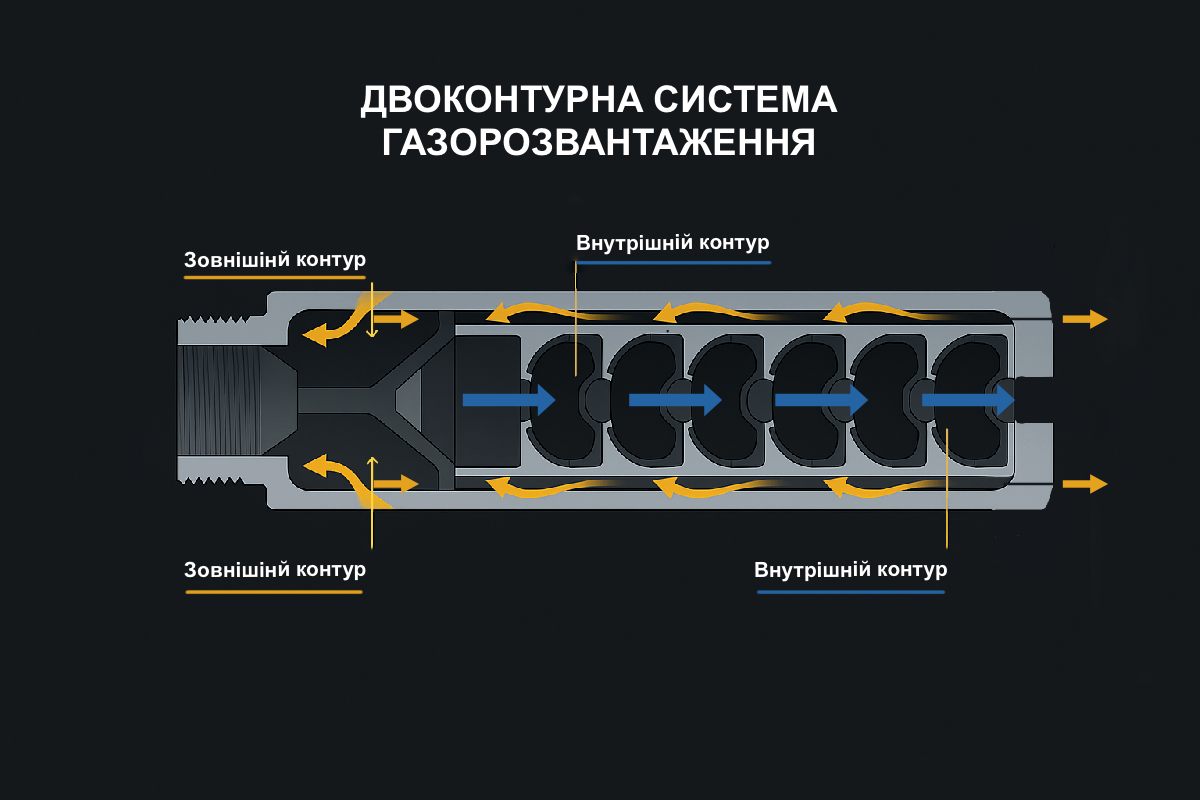
- Main circuit. The flow goes through chambers, where it is slowed down step by step and loses speed.
- Relief circuit. Takes away part of the gases before the main volume and releases them through separate outlets. It acts as a compensation: reducing peak backpressure and eliminating sharpness.
The result - less back pressure in the receiver, less lift, predictable cycle.
How This Differs from a "Regular" Suppressor
| Regular Suppressor | CORE / MICRO with CASCADE |
|---|---|
| One flow channel | CASCADE flow-through |
| Partial suppression of the flash | Complete suppression |
| Overheating after 2-3 magazines | Handles 6+ magazines in a row |
| Noticeable lift, cycle jumps | Predictable cycle, soft lift |
Why This Matters
- For the hunter - less glare from the sight due to flash and no surprises from the cycle.
- For the competitive shooter - less wear on expensive firearms, predictable automation.
- In a series - maintaining the aiming point and quick second shot.
Where Each System Is Used
CASCADE - in CORE and MICRO. ZERO (5 stages / 8 channels) - only in ARCANE. LEGION - a simple endurance line with no flow-through system: suppression and flash are present, but excess gas is not vented forward. A conscious bet on simplicity and price - if gas control is needed, it’s CORE/MICRO with CASCADE or ARCANE with ZERO.
Conclusion
A flow-through system is not just a "feature in the catalog". It determines the behavior of the weapon after the very first shot. In CORE and MICRO, it is implemented as CASCADE - a field-tested architecture for long series. Not a moderator. An engineering solution for real shooting.
Frequently Asked Questions
What is the CASCADE flow-through system?
CASCADE is a dual-circuit flow-through system in CORE and MICRO. It vents excess pressure so that less gas returns to the receiver. The result - a softer cycle and longer life of the bolt group.
How does CASCADE differ from ZERO?
CASCADE (CORE/MICRO) - dual-circuit, designed for resource and soft cycle. ZERO (ARCANE) is more complex: 5 stages / 8 channels with titanium in the hot zone and more complete impulse control. LEGION has no flow-through system at all.
Why do I need a flow-through system?
If you shoot a lot and in long series - it protects the bolt group and eliminates smoke in the face from overgas. For rare shots, there is no critical need, but the cycle still feels softer.
Which model has which system?
CASCADE - in CORE and MICRO. ZERO - in ARCANE. LEGION - a simple endurance line with no flow-through system. The choice depends on how much and how you shoot.